01 — Introduction

Everything your smartphone shares without you

approx. 3 min read time

Every day you carry a device with you that knows more about your life. It accompanies your conversations, knows your habits, stores your memories and is constantly connected to the digital world.

But how well do you actually know your smartphone?

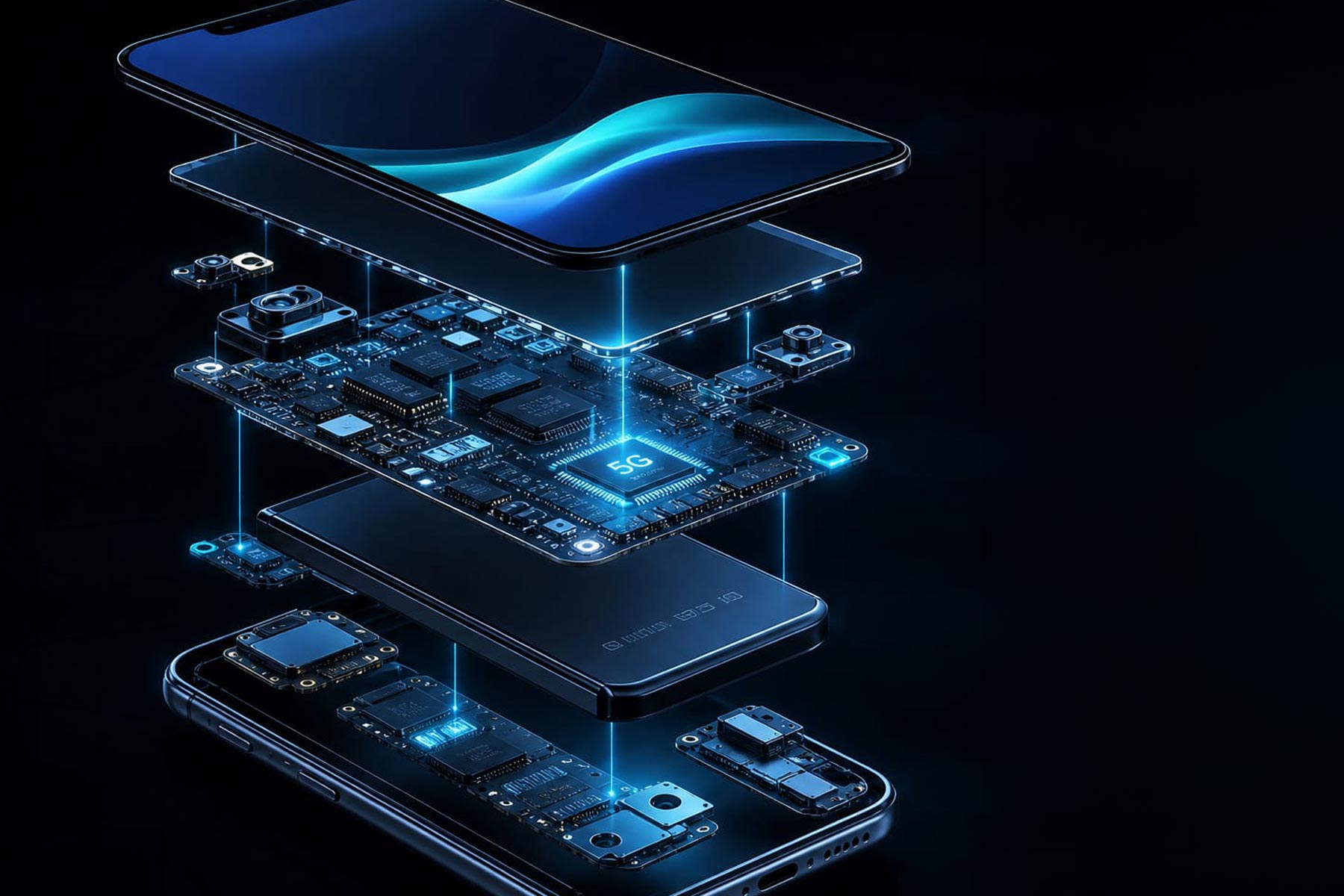
They have long become highly complex computer systems. Yet what happens inside them remains hidden for most people. While on the surface, apps, settings and privacy options suggest transparency and control, the underlying components — processors, modems, sensors, firmware and system layers — remain largely opaque. Yet that is where it is decided which data is created, processed and forwarded — often without you being able to understand it.

12+
Actors access your device — often without active app usage
every 4.5 min
a standard Android device sends data — even with display locked
70%
of hardware components operate in the background — not traceable
0
Devices enable full insight into the mobile phone chip today
Smartphone layers interactive

On PC: hover with mouse. On mobile: tap.


02 — Background

Most people trust their smartphone daily with their communication, their habits, their locations and a large part of their digital life. But who controls the systems that make it all possible? Which data is collected at the hardware or firmware level? Which diagnostic data leaves the device without the user initiating it? And what role do third-party manufacturers, suppliers or analysis partners play in this chain?

As long as the fundamental components of a device operate in the background, our digital self-determination remains incomplete. Trust should not be based on assumptions, but on transparency. Not on promises, but on verifiability.

That is why we direct attention to where few look. We want to make visible what is happening beneath the surface, ask questions that have gone unanswered so far, and sharpen awareness of the technologies that shape our digital everyday life.

The more people understand what is happening beneath the surface of their smartphones, the greater the pressure on manufacturers to create openness rather than opacity. That is why we make visible what has remained hidden so far – and advocate for the path to the transparent smartphone.

Because whoever wants to help shape the digital future should know what it is built on. Change begins with knowledge. And with people ready to look closer.


03 — System Layers

What happens beneath the surface.

01

Processors

A modern smartphone processor is not just a compute unit, but often part of a complex ecosystem of embedded firmware, proprietary controls and telemetry channels.

The same applies to devices from major manufacturers like Apple or Samsung, whose hardware is deeply linked to closed system architectures. For users, it often remains unclear which diagnostic data is collected at the system level, how it is processed, and whether or in what scope it is passed on to external service providers or component partners.

02

Operating Systems

Even more critical is the role of operating systems. Platforms like Android and iOS form the central control layer of every smartphone. They decide on rights, access and system communication — often without true insight into the underlying processes for the end user.

Even when privacy settings are available, many system-level data flows remain hidden or are technically not fully disableable.

03

This opacity raises fundamental questions

Which data is collected at hardware or firmware level? Which diagnostic data leaves the device without the user actively triggering it? And what role do third-party manufacturers, suppliers or analysis partners play in this chain?

A possible way out lies in open systems and verifiable technology. Open-source-based operating systems like LineageOS or GrapheneOS show that it is technically possible to make system layers more transparent and auditable. Open firmware approaches, documented hardware interfaces and independent reviews could help create trust not just through promises, but through verifiability.

It is time to shift focus away from individual apps and toward the actual foundation. True digital sovereignty does not begin with the application — but with the transparency of the components that make everything underneath possible.


You now know more about smartphones than most. Do something with it.

Get involved →
Newsletter

Stay informed. Shape it.

News from association & projects.